
How To Clean The Smelly Kitchen Sink Drain
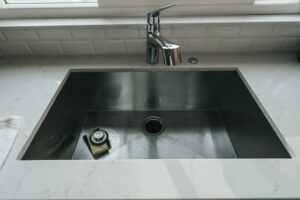
Your kitchen sink drain is one area in your house that conceals an entire world of grime, oil, and enigmatic odors.
Every plate, pan, and leftover sauce goes through the small metal circle like it’s the entrance to a different universe.
However, that environment eventually becomes gloomy, slimy, and, well, odorous.
Therefore, it’s time for a thorough cleaning if your sink is beginning to “talk back” to you with strange smells or sluggish drainage.
Put on your work clothes, grab a cup of coffee, and let’s attack that drain the proper way.
🧴 What’s in Your Drain and Why Does It Smell That Way?
It’s important to comprehend the true situation down there before we begin the fix.
There’s more to your drain than a hole. This is a little ecology, and not a cute one.
What accumulates is as follows:
-
That sticky substance from cleaning pans is grease and oil.
-
Soap scum – because soap eventually becomes unclean as well.
-
The small food particles that your strainer overlooks.
-
The unpleasant inhabitants that produce unpleasant odors are bacteria.
-
Accumulation of minerals due to time and harsh water.
These work together to cause your drain to slow down, smell, and eventually clog.
The good news, though? It is easily reversible without the need for costly plumbers or harsh chemicals.
🧰 Essentials
This is your basic setup, using items you most likely already have in your kitchen.
| Item | Goal |
|---|---|
| Baking Soda | Deodorizes, breaks down grease, and gently scrubs |
| White Vinegar | Eliminates germs and dissolves accumulation |
| Boiling Water | Everything is dissolved by boiling water |
| Dish Soap | Reduces oil and softens filth |
| Pipe Cleaner or Brush | Penetrates and removes dirt |
| Lemon (not required) | Helps with odors and adds freshness |
Step 1: Bring Water to a Boil
The easiest thing to do is to heat a pot of water until it is bubbling hot.
To soften whatever is stuck inside, slowly pour it down the drain.
This initial flush provides you a head start and removes grease.
In Step Two, Add the Baking Soda
About half a cup of baking soda should be poured straight down the drain.
Give it a minute or two to sit. As it begins to function, you will hear a slight fizz.
Your scrubber is this fine powder, which removes dirt without causing any scratches.
Add the Vinegar in Step Three
The exciting part is about to begin.
Pour a cup of white vinegar down the drain slowly.
The science is at work when you hear fizzing, bubbling, and possibly even a slight hiss.
Place a small plate or stopper over the drain and leave it in place for ten to fifteen minutes.
💡 Did You Know?
Not all of that fizzing is only for show.
In fact, accumulation deep within the pipe is dislodged by the reaction of vinegar (an acid) and baking soda (a base).
The idea behind those volcano science projects is the same, only it’s cleaner.
Step 4: Rinse Everything Out
To rinse everything off, bring another kettle of water to a boil and dump it down the drain.
By now, the majority of the dirt and smell should be gone.
Don’t worry if it’s still a touch slow; it simply needs some muscle.
The Brush Trick in Step Five
Scrub the area of the drain opening that is visible using a pipe brush or even an old toothbrush.
Remove any strainers or stoppers that are detachable from your drain and wash them individually in warm, soapy water.
Rinse once more after that.
Step 6: Incorporate Newness
Slice a lemon in half, then use your disposal (if you have one) to grind up the peel after squeezing the juice down the drain.
Instant freshness, together with a small amount of natural disinfection.
⚡ Fast Tip: The Habit of Weekly Drain
Do you want to avoid that slimy odor in the future?
Before going to bed once a week, pour a solution of vinegar, baking soda, and hot water down your drain.
Rinsing is not necessary till morning.
In addition to keeping things tidy and in motion, it spares you from those panicky “why does my sink smell like death?” situations.
🌬 The Dirty Little Secret About Odors
Let’s now take a moment to be realistic.
Your pipes aren’t the only issue if your house still smells musty, heavy, or strangely stale even after you’ve cleaned your drain till it sparkles.
Kitchens are cunning, you see.
As you cook, they catch smells, volatile organic compounds (VOCs), and tiny greasy particles that float into the air.
They cling to walls, drapes, and even the gasket of the refrigerator.
Because the air is contaminated, the odor persists even after you clean the sink.
This is when the exciting part begins.
💨 The Benefit of Air Purifiers (Halbert-Style Truth Bomb)
I’ll tell you what I discovered the hard way.
I used to clean my kitchen obsessively with bleach, vinegar, baking soda, and everything else.
It never smelled clean, though, for some reason.
Do you recognize that unseen weight in the atmosphere? Like old toast, humidity, and the smell of cooking? Yes, that.
Then one day, a friend of mine says,
“Dude, you don’t have a kitchen issue. You’re having trouble breathing.”
I believed him to be insane. until I spent a week using his air purifier.
It seemed as though the “fresh air” switch had been flipped within two days.
No stale smells. The windows are free of oily film. My allergies even calmed down.
Why? Because an air purifier removes pollutants, dust, grease, and volatile organic compounds (VOCs) from the air instead than merely blowing air around.
It’s like to having a little cleaning crew that works around the clock to get things your mop can’t.
Consider This
Your sink is sparkly, clean, and smells like lemon after a thorough cleaning.
You turn to leave, take a breath… and the smell of clean air permeates the entire kitchen.
No lingering chemical effects.
No “dishwater funk” left behind.
Simply crisp, pure freshness that feels healthier.
When you leave a good air purifier running in the background, that’s what occurs.
It’s not hype; rather, it’s airborne hygiene.
🌿 Why It’s More Important Than You May Imagine
You deal with what you can see when you clean surfaces.
Energy, emotion, and health are all affected when the air is purified.
The worst part is that clean air prolongs the cleanliness of everything else.
Dust settles more slowly.
Odors fade more quickly.
Fighting airborne bacteria doesn’t require your sink drain to put forth extra effort.
It can be compared to setting a reset button in your kitchen.
🧩 Troubleshooting Typical Drain Issues
After cleaning, don’t freak out if your drain still feels slow or smells.
This is a brief guide.
| Issue | Most Likely Cause | Fix |
|---|---|---|
| The drain smells foul once more. | Accumulation farther down the pipe | Use vinegar once a week and repeat cleaning. |
| Slow water drainage | Blockage of grease or clog | Use vinegar, baking soda, and boiling water twice. |
| Gurgles or bubbles | P-trapped air | Use hot water to flush. |
| Lingering odor | Problems with air quality | Turn on an air purifier close to the sink. |
🌈 Interesting Extra Tricks
To keep things interesting and a little more enjoyable, try these occasionally:
-
Every week, put some ice cubes and lemon peels in your disposal to freshen the air and sharpen the blades.
-
For more scrubbing power, sprinkle the baking soda and salt mixture before the vinegar stage.
-
For natural antibacterial magic, put a few drops of essential oil (such as peppermint or tea tree) down your drain once a week.
💡 Did You Know?
-
Airborne germs that land on walls and worktops, rather than just drains, are the primary source of most unpleasant kitchen odors.
-
This is the reason why air purification and surface cleaning work so well together.
Putting Everything Together
Cleaning the drain from your kitchen sink is a ritual that helps you restore freshness in your house, not just a task.
-
Not only are you cleaning away debris, but you’re also revitalizing your area.
-
Because the air seems lighter when your drain is clear.
-
And you feel better when the air is lighter.
Concluding Remarks
Let’s be honest: we spend hours cleaning the surfaces that are visible to us, including sinks, floors, and counters.
However, the factors that truly impact the atmosphere of your house are imperceptible.
This week’s challenge consists of two parts:
-
Use the natural baking soda + vinegar approach to thoroughly clean the drain in your kitchen sink.
-
For a full day, leave an air purifier running in your living room or kitchen.
Then observe the change.
-
The air, the atmosphere, the scent.
-
That’s actual, palpable home freshness, not marketing jargon.
Because cleanliness is more than simply appearances.
It is something that you inhale.