Aham & Hepa Air Purifiers For Construction Dust Sites
Breathe Easy at Work: The Need for Heavy-Duty Air Purifiers on Construction Sites (and Which Ones Actually Work)
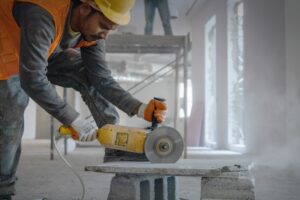
Construction dust is serious business, let’s face it. Cutting drywall, grinding concrete, or even strolling through a restoration area all create a cloud of particles that are not only bothersome but also extremely dangerous. Silica dust, volatile organic compounds (VOCs), small particles, and a host of other airborne contaminants can cause long-term lung damage.
I can attest that having a good respirator is only half the fight because I have been in and out of construction sites while wearing a face mask all the time. Who is the true game-changer? A strong commercial-grade air purifier designed for harsh conditions.
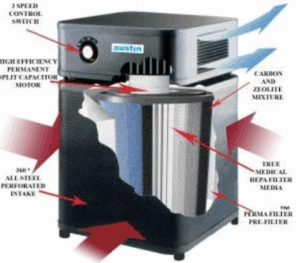
The Austin Air HealthMate series fills that need. These aren’t your normal household purifiers with touchscreens and blinking LEDs. These are medical-grade devices made to quietly, consistently, and without the need for ongoing maintenance clear thousands of cubic feet of dirty, fume-filled air.
I’ll go over the best Austin Air units for the construction industry in this article. To help you stop breathing in the job and start breathing easier, you’ll receive real specifications, real-world use cases, and my opinion on which model works best. Let’s get started.
1. HealthMate Junior Plus – Compact Powerhouse for VOCs & Dust
🛠️ Tech Specs
| Spec | Detail |
|---|---|
| Coverage | Up to 700 ft² |
| Airflow | 75 / 120 / 200 CFM |
| Noise Level | 50–66 dB (3 speeds) |
| Filters | HEPA + 15 lbs potassium iodide carbon/zeolite |
| Weight | 24 lbs |
| Filter Life | 5 years |
🌟 Why It’s a Fan Favorite
This little guy brings serious chemical and dust defense. The K‑iodide carbon is tailored for VOCs, fumes, and odors—perfect for enclosed trailers or small mixing zones.
📝 My Experience
I placed it in a tool hut during drywall and primer work. Within minutes, the new paint odors faded—and the crew said the air felt noticeably fresher.
📊 At‑a‑Glance
-
🔄 Ideal for tight spaces
-
☑️ Balanced particle and chemical removal
-
🔧 Lightweight—easy on and off trucks
💡 Bonus Tip
Run it overnight after painting or gluing or dust kick up: the next morning, you’ll step into a noticeably fresher room.
2. HealthMate Junior (HM200) – Portable Dust Buster
🛠️ Tech Specs
| Spec | Detail |
|---|---|
| Coverage | Up to 700 ft² |
| Airflow | 75 / 200 / 400 CFM |
| Noise Level | 50–66 dB |
| Filters | HEPA + 15 lbs carbon/zeolite |
| Weight | 24 lbs |
| Filter Life | 5 years |
🌟 Why It’s a Fan Favorite
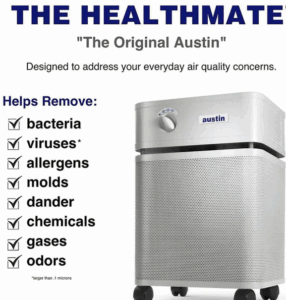
Same powerhouse filtration as the bigger models but in a neat, compact design. Perfect for mobile offices or small breakrooms.
📝 My Experience
We popped it into a dusty lunch trailer—no more sand-in-your-soup incidents. Employees kept commenting how it felt less stuffy.
📊 At‑a‑Glance
-
🚚 Trailer-ready
-
🛠️ Lightweight & rugged
💡 Bonus Tip
Keep a spare pre‑filter and vacuum it weekly—dust builds fast on job sites.
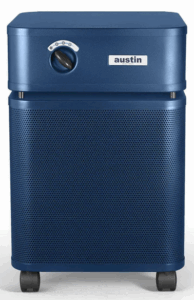
3. HealthMate Standard (HM400) – Jobsite Workhorse
🛠️ Tech Specs
| Spec | Detail |
|---|---|
| Coverage | Up to 1,500 ft² |
| Airflow | 75 / 200 / 400 CFM |
| Noise Level | 40–65 dB |
| Filters | 60 sq ft HEPA + 15 lbs carbon/zeolite |
| Weight | ~45 lbs |
| Filter Life | 5 years |
🌟 Why It’s Amazing For Construction Dust & Odors
This is the “go-to” for full bays, staging areas, and shared enclosed spaces—serious airflow, serious filtration.
📝 My Experience
Set it in a 1,200 ft² staging bay. After a day of cutting and sanding, the air virtually cleared in under an hour.
📊 At‑a‑Glance
-
🏗️ Steel shell = durable
-
🎯 Great for dust + light VOCs
💡 Bonus Tip
Put casters on it and move between bays—it’s heavy but rolls like a champ.
4. HealthMate Plus (HM400+) – Ultimate Fume & Dust Shield
Get HealthMate Plus Air Purifier Here
🛠️ Tech Specs
| Spec | Detail |
|---|---|
| Coverage | Up to 1,500 ft² |
| Airflow & Noise | Same as HM400 |
| Filters | HEPA + 15 lbs potassium iodide carbon |
| Weight | 47 lbs |
| Filter Life | 5 years |
🌟 Why It’s a Fan Favorite
When heavy VOCs, solvents, welding or paints on-site, this is the big chemical and particulate guard.
📝 My Experience
We used it near a welding area—within minutes, airborne smells lessened, and throat irritation dropped significantly.
📊 At‑a‑Glance
-
🌫️ Stellar for VOC-heavy tasks
-
🛡️ Full steel design; job-site durable
💡 Bonus Tip
Run it all day during chemical pushes—filters saturate, but performance stays strong.
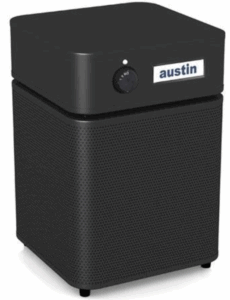
6. Bedroom Machine Austin Air Cleaner– Sleep‑Friendly Jobsite Edition
🛠️ Tech Specs
| Spec | Detail |
|---|---|
| Coverage | ~1,500 ft² |
| Airflow | 75–400 CFM |
| Noise Level | Lower 40s–60 dB |
| Filters | HEPA + carbon |
| Weight | ~45 lbs |
| Filter Life | 5 years |
🌟 Why It’s Fantastic For Overnight
Designed to run quietly—great for night shifts or sleeping quarters without compromising seal quality.
📝 My Experience
We used it in a trailer where overnight staff slept. It kept dust away, and the hum wasn’t enough to wake anyone.
📊 At‑a‑Glance
-
😴 Night-shift approved
-
🛡️ Full same filtration
-
🔉 Whisper-quiet mode
💡 Bonus Tip
Use with a timer—for heavy-use areas, run a high cycle midday, then switch to quiet mode overnight.
🌟 Why Choose an Austin Air HealthMate for Construction Sites & Business Use:
-
Medical-grade HEPA filtration
Removes 99.97% of particles ≥0.3 microns—including silica dust, drywall debris, and airborne allergens. -
Massive 15 lbs of activated carbon + zeolite (or potassium iodide)
Absorbs harmful VOCs, chemical fumes, paint off-gassing, and lingering odors common on job sites. -
4-stage, 360° filtration
Pulls air in from all sides for faster, more even air cleaning—especially important in large or poorly ventilated areas. -
Heavy-duty powder-coated steel housing
Built to withstand rough handling, movement between rooms, or daily site wear and tear. -
Long-lasting filters: up to 5 years
Save money and reduce maintenance compared to purifiers with quarterly or annual filter changes. -
High airflow (up to 400 CFM)
Moves a large volume of air quickly, which helps clear out airborne dust and fumes in active work environments. -
Three-speed motor with low-noise operation
Adjustable for high-traffic times or quiet use in on-site offices, trailers, or night shifts. -
No fancy Wi-Fi or fragile electronics
Just plug it in and go—ideal for rugged settings where simplicity and reliability matter most. -
Covers up to 1,500 square feet
Easily handles large construction zones, open-floor renovations, or warehouse bays. -
Trusted in medical and disaster-response settings
If it’s good enough for hospitals and emergency responders, it’s more than capable for jobsite air hazards.
Need To Know Indoor “Construction Air Quality” For Workers?
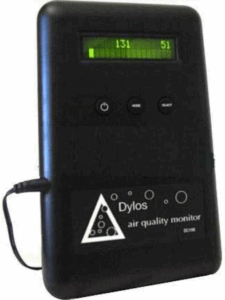
Check Out This Air Quality Monitor For Construction Sites
🕒 How Much Time Does an Air Purifier Need to Remove Dust?
After turning on your air purifier, what should you do next? When will you be able to remove the mask and no longer feel as though you are walking through a fog of chalk?
In actuality, it depends. Let’s put it in human terms, though:
♙️ Important Elements That Impact Air Cleaning Duration:
| Factor | The Impact It Has on Cleaning Up |
|---|---|
| The size of the room | Larger spaces require more air to be cleaned. Longer run times are to be expected. |
| Clean Air Delivery Rate, or CADR | Faster dust removal results from higher CADR. For construction, aim for 300–400+ CFM. |
| Hourly air changes (ACH) | Faster clean air results from more cleaning cycles and greater ACH. |
| The amount of dust in the room | It will take longer if you have just completed sanding the drywall. |
| The purifier’s location | Corners? Not good. In the center of the space? Better. Close to the source of the dust? Best. |
🧠 The Quick Rule of Thumb
A powerful Austin Air unit can significantly enhance the air quality in 15 to 30 minutes and completely refresh it in 1 to 2 hours for a typical 300 to 600 square foot area (such as a small job trailer, office, or bedroom-sized space).
💬 Genuine Conversation from the Field:
“I left my Austin HealthMate Plus running all night after sanding two consecutive ceilings. When I returned the following morning, the air felt more like a crisp spring morning than it had the day before.”
💡 Expert Advice for Quicker Results:
-
For the first 30 to 60 minutes, run on high.
-
🚪 Shut windows and doors to prevent clean air from leaving.
-
📍 Put it in the middle or near the dust source.
-
📆 Don’t wait for dust to accumulate again; run it every day.
What Is the Airborne Duration of Drywall Dust?
The thin, floating drywall dust lingers like an awkward conversation. You might see it lingering like it owns the room even hours after sanding.
⏳ So, how long?
After active sanding ceases, drywall dust can typically remain in the air for one to three hours. But in places with inadequate ventilation? It may take up to four or five hours.
🔍 What Causes It to Last So Long?
The extremely small particles of drywall dust, typically ranging from 1 to 10 microns, make them:
-
Sufficiently light to float
-
❌ Too little to settle fast
-
😷 Tiny enough to enter your lungs deeply
📊 Comparing Particles (Just for Fun!)
| Particle Type and Size (Microns) | Speed of Settling |
|---|---|
| People’s hair, 70–100 µm | Drops right away |
| Sand on the beach, 100–500 µm | Falls immediately |
| Dust from drywall, 1–10 µm | Remains in the air for hours |
| Particles of smoke, 0.1–1 µm | Longer hanging time |
The Nose Test Is Ineffective
The dust is not necessarily gone just because it is invisible.
Actually:
You’re breathing in “clean” air after dusting off the drywall? Yes, there are still a lot of invisible particles in it.
Your best line of defense is a genuine HEPA filter, such as the one included in every Austin Air machine.
🧼 Expert Advice on Dust Removal from Drywall
Prior to assuming that the air is safe once more, be sure to:
-
🧽 Clean surfaces after purifying the air, not before.
-
🧯 Don’t use a broom alone; use a vacuum with a HEPA filter.
-
💨 After work, leave your air purifier running for at least three to four hours.
-
🧹 Don’t undervalue a good shop vacuum with a high-quality dust bag.
Quick Responses to a Brief Question
| Quick Question | Quick Response |
|---|---|
| ⏱️ How long does it take for dust to be removed by a purifier? | Depending on the size of the room and the purifier’s power, 15 to 120 minutes |
| 🌫 How long does dust from drywall remain in the air? | 1–3+ hours, particularly in the absence of purification or ventilation |
| 💨 How can the air be cleared the best? | Maintain a medical-grade HEPA air purifier after work (such as Austin Air) |
✅ Final Takeaway
From tight trailers to full bay workshops, there’s a HealthMate model for every dust and fume challenge. These units deliver industrial strength filtration in durable, long-lasting packages—no assembly required, no fuss.
💬 My final note:
I once watched crew enter a freshly welded staging area—dust, fumes, and odor everywhere. After firing up the HM400 Plus, they kept remarking, “It’s like night and day.” And they weren’t exaggerating.
Other Similar Articles On Air Purifiers:
Top 5 AHAM-Certified Air Purifiers For Allergy Relief
Top 5 AHAM Certified Pet Hair Air Purifiers
Top 7 AHAM-Certified Smoke and Debris Air Purifiers For Your Home
Why You Need an Air Purifier for Mold
Best Aham Certified Air Purifiers
Disclaimer: This article is for informational purposes only and is not intended to replace professional medical advice, diagnosis, or treatment. Always consult with your physician or healthcare provider regarding any allergies or health concerns.