🍳 How To Remove Rust From A Blackstone Griddle And Restore It
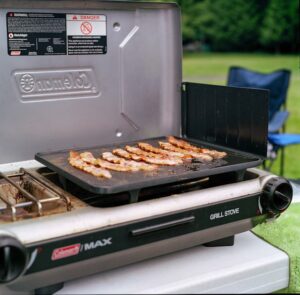
Cooking on a Blackstone griddle has an almost meditative quality because to the golden pancake flip, the sizzling bacon symphony, and the aroma of grilled onions at dusk. But what if rust starts to appear? The romance quickly comes to an end.
That orange-brown layer is looking back at you when you raise the cover. It has a gritty vibe to it. The gleam has vanished. Perhaps the first thing that comes to mind is: Is this ruined?
Not at all. The good news is that a rusty griddle can be revived, usually in a single afternoon. The proper equipment, a little perseverance, and a little elbow grease are all that are required.
After we’ve finished cleaning it, I’ll reveal a trick that will keep your entire outdoor cooking area, as well as your entire house, feeling fresher, cleaner, and healthier for a very long time.
🧠 The Reasons Behind Griddle Rust (Even With Care)
Simply put, rust is the result of a chemical party that you weren’t invited to, consisting of metal, oxygen, and moisture.
Typical reasons:
-
Not lubricating the surface after use
-
Allowing moisture to remain trapped behind a cover
-
Keeping in coastal or humid environments
-
Acidic residue from cleaning products or food
-
Neglect throughout certain seasons (hey, life happens)
However, if you know what you’re doing, the same steel surface that rusts easily may also be cleaned up nicely.
🧰 Essentials
In order to work efficiently while the surface is warm and sensitive, gather your tools first.
List of supplies:
-
Grill spatula or metal scraper
-
Pumice block or grill stone
-
Kosher or sea salt, or coarse salt
-
White vinegar
-
Microfiber cloths or paper towels
-
Cooking oil (either flaxseed, avocado, or canola)
-
A bucket filled with warm water
-
Gloves that can withstand heat
-
Optional: A drill with a wire brush attachment (if the rust is severe)
⚙️ Detailed Instructions for Cleaning Rust on a Blackstone Griddle
From flaky orange disaster to shining, seasoned perfection, here is the complete rescue plan.
Step 1: Turn It On (Gently)
For ten to fifteen minutes, turn your griddle on to medium-low heat.
Debris is loosened and the rust coating is softened.
After that, switch it off and allow it to cool down a little so that it’s not too hot to touch with gloves.
💡 Pro tip: Avoid gouging the steel by working warm, which facilitates scraping.
Step 2: Remove Any Loose Rust by Scraping
To get rid of as much surface rust as you can, use a grill spatula or metal scraper.
To prevent scratching deep grooves, push forcefully while maintaining a flat blade.
Use dry paper towels to remove the debris.
Step 3: Dissolve Any Remaining Rust with Vinegar
Apply enough white vinegar to the surface to coat it.
The mild acid will react with the rust if you leave it for five minutes.
Next, liberally dust with coarse salt, which serves as an abrasive.
Use your pumice block or grill stone to scrub in circular motions.
The rust will be removed if you notice orange residue lifting.
If required, repeat until the metal appears uniformly gray once more.
Step 4: Wash and Clean
Wipe the surface clean with paper towels or rags dipped in warm water.
Be sure to get rid of any remaining salt and vinegar.
Use additional towels to completely dry; there should be no water left behind.
Step 5: Warm the Surface and Season It
Here’s where the magic takes place.
Restart the griddle on high heat and cook for 15 minutes or so, or until it starts to color a little.
After it’s hot, use tongs and a paper towel to evenly apply a tiny bit of oil on the surface.
After ten to fifteen minutes of smoking, switch off the burners.
The oil polymerizes as it cools, forming a covering that is resistant to rust and non-stick.
For optimal results, repeat this oiling step two or three times.
Step 6: Upkeep Following Cooking
Following every use:
-
While the dish is still warm, scrape off any leftovers.
-
Use a paper towel that has been gently lubricated to wipe.
-
Never leave it unoiled or damp.
That’s all. I can assure you that once you settle into this routine, your griddle will never rust again.
Step 7: For Severe Rust, Deep Restoration
Don’t worry if your surface resembles the terrain of Mars.
To remove the thick rust, use a drill fitted with a wire brush attachment.
Work uniformly over the whole surface.
After cleaning and rinsing with vinegar, proceed with the aforementioned seasoning instructions.
Even a neglected griddle can be saved by this noisy and untidy device.
🔍 Fast Reference Table
| Step | Objective | Tools Required | Time |
|---|---|---|---|
| Warm up the griddle | Remove rust | Burners | 10 to 15 minutes |
| Scratching | Eliminate any loose rust | Scraper for metal | 5 to 10 minutes |
| Salt and vinegar scrub | Break down the rust | Salt, vinegar, and pumice | 10 to 20 minutes |
| Wash and pat dry | Stop the reaction | Towels and water | 10 minutes |
| Use paper towels and oil | Protect the surface | — | 30 to 45 minutes |
| Continue to | Avoid corrosion in the future | Scraper and oil | Following each use |
🔧 Advice to Avoid Rust
-
Keep your griddle indoors or covered with a ventilator.
-
Lightly coat with oil after each use.
-
Avoid using soap as it will remove the layer of seasoning.
-
Wrap in parchment and rub with a thicker layer of oil if storing for an extended period of time.
-
Steer clear of acidic marinades that remain on the surface for too long.
Because your Blackstone is constructed of steel, it will last for many years if you treat it like cast iron.
🌬️ Cleaning’s Forgotten Aspect: Your Environment
The air is another invisible layer that most people overlook, even when your griddle is shining again.
Tiny particles and odors are released into the air each time you clean, scrape, or season your griddle:
-
Dust from scraping that is rusted
-
Vaporized vinegar
-
Smoke from the seasoning of carbonized oil
-
Food and tiny metal residues
You breathe such particles into your home if your griddle is next to an interior vent or patio door.
This is where having a home air purifier operating in the background quietly makes all the difference.
💨 The Unseen Helper: An Air Purifier for a Healthier Kitchen and a Cleaner Home
The P2000 Air Purifier

✅ Check It Out Here
Consider an air purifier as your air’s “seasoning”—inconspicuous, protective, and subtly effective.
It’s busy cleaning the air while you concentrate on cleaning the steel:
-
captures tiny particles of smoke and rust dust before they settle.
-
eliminates volatile organic compounds (VOCs) from oils and vinegar.
-
eliminates persistent food scents that stick to textiles.
-
filters indoor airborne grease, dust, and pollen.
Additionally, your house smells and feels cleaner when the air is cleaner, not only immediately following a thorough cleaning but throughout the whole week.
🌿 Consider This
Your Blackstone restoration is complete. The surface gleams sleek and black once more.
When your first batch of sizzling fajitas is cooked, you breathe in fresh, neutral air rather than that lingering, smokey after-smell.
Not only is that fulfilling, but it’s also healthier.
Air that is devoid of oil and tiny metal dust is good for your lungs, walls, and furniture.
🌫️ The Reason Clean Air Finishes the Cleaning Task
Once the surface appears clean, most people stop cleaning. However, you can rest assured in a house that feels genuinely clean.
When you combine your griddle maintenance regimen with an air purifier, you get:
-
Extended freshness
-
Reduced accumulation of greasy residue on adjacent surfaces
-
Reduced residual cooking odors
-
An air in your house that is clearer and lighter
Like seasoning your griddle, it’s necessary yet unseen.
🌱 The All-Natural Method for Safeguarding Your Treasures
Cooking outdoors (or even close to open doors) introduces invisible airborne particles into your surroundings.
Placing an air purifier in the middle of your living area automatically balances your home’s ecosystem:
-
eliminates odors rather than covering them up.
-
minimizes indoor pollutants emitted when cleaning or cooking.
-
relieves respiratory discomfort and allergies.
-
Even on humid days, it keeps your house feeling airy and open.
Clean air and clean surfaces go hand in hand.
What you touch is protected by one, and what you breathe is protected by the other.
Removing rust from your Blackstone griddle is a renewal process rather than only upkeep.
You’ve restored the seasoning, revived the steel, and rekindled your passion for cooking outside.
However, cleansing the air in your area provides the last touch, or the unseen shine.
Because if the air is still filled with aromas and pollutants, what good is a beautiful griddle?
Allow an air purifier to silently hum in the background while you admire that immaculate, glossy surface.
It will protect your lungs in the same way that seasoning protects steel.