
5 Best Humidifiers For Acoustic Guitars Plus Humidity Monitor

If you’ve ever picked up your acoustic guitar one morning and wondered, “Why does it suddenly feel stiff, dull, or buzzy?” it’s probably because of the humidity. Wood is alive; it breathes, expands, and shrinks when the air changes.
That’s why keeping your guitar safe from changes in humidity isn’t just for collectors; it’s important for anyone who wants their tone, playability, and setup to stay the same all year long.
This tutorial will explain why keeping an eye on humidity is crucial (hint: it’s more important than you think) and tell you about the five best humidifiers that every guitarist should know about.
*This site participates in the amazon associates program. Some links may contain affiliate links, we might earn a little commission—at no extra cost to you. We only recommend products and ideas we genuinely love.
The Significance of a Guitar Humidity Monitor in the Space
A Personal Story
I’ll tell you a little story: I kept my second guitar, a mid-grade dreadnought, in a chamber in my basement when I originally purchased it.
“Oh, it’s not a museum piece — it’ll be fine,” I thought.
After a few weeks, my beloved guitar started to sound drab, the fretboard shrank, and the top started to sink. Ambient humidity fluctuations are the “silent killer,” which I had overlooked.
Here’s A Great Guitar
Why Room Humidity Matters
The key point is that a guitar humidifier located inside the case or soundhole only addresses local humidity; the humidity in the room is what continuously affects your instrument.
The humidifier may have trouble keeping up if the environment is excessively dry, or dry air may slip in.
You run the risk of swelling, bubbling wood, seam stress, and other issues if the environment is overly humid.
Wood and glue seams are stressed by abrupt changes (morning vs. evening, heater on vs. off).
The First Line of Defense
Therefore, your first line of defense should be a good hygrometer or humidity monitor for the room.
To determine when the room is falling below safe levels (often between 40 and 45 percent relative humidity) or rising above 55 to 60 percent, many guitarists use cheap hygrometers or smart Bluetooth ones. (For comparison, a lot of woodshops that make guitars run between 45 and 50 percent RH.)
Understanding Your Space
Knowing the baseline humidity behavior of your space can help you select a humidifier that “fills in the gaps” rather than constantly striving for an unachievable goal.
What Makes a Great Humidifier for Acoustic Guitars?
Before diving into the picks, here are the key criteria I used (after testing, reading user reviews, and mentally weighing trade-offs). Think of this as your “shopping checklist”:
| Feature | Why It Matters | Ideal or Acceptable |
|---|---|---|
| Two-way vs one-way | Two-way can absorb excess humidity too, which is safer in fluctuating climates | For stable climates, good one-way is acceptable |
| Refill frequency / capacity | If you’re refilling every day, you’ll forget or mis-manage | A humidifier that lasts 5–14 days between refills is ideal |
| No leakage / drip risk | Any internal leak is a disaster | Device must be reliably sealed or low risk |
| Ease of installation / removal | You’ll swap, clean, inspect — if it’s a PITA, you’ll neglect it | Tool-free or quick-swap sponge designs |
| Monitoring / hygrometer built-in | Helps you see how your guitar environment is doing | A built-in hygrometer is a plus, though separate is okay |
| Replacement parts / sponges | Over time, parts wear out | Readily available spares for your model |
💡Tip
A humidifier is only as effective as your maintenance routine.
What is the leading cause of damage? Forgetting to replenish.
🎶 Top 5 Humidifiers For Acoustic Guitars
Let’s get to the good stuff: the five top-rated, real-world-tested humidifiers that guitarists (and repair technicians) rely on.
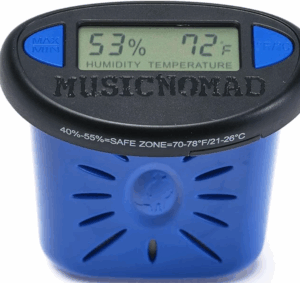
1️⃣ Music Nomad Humitar ONE
✅ Check It Out Here
Why I love it:
This solution combines a humidifier and hygrometer. It’s ideal for those who want something tiny and sophisticated without having to juggle multiple gadgets.
Standout features:
-
The built-in LCD screen displays real-time humidity and temperature.
-
Long-lasting sponge (known as the Humid-i-Bar) that remains damp for about a week.
-
Simple refill design—just pop the lid and re-moisten.
-
Works directly in the soundhole or within the casing.
Potential drawbacks:
-
If the hygrometer fails, the entire unit becomes less functional.
-
Slightly more expensive than basic sponge models.
Ideal for:
Players seeking a comprehensive, data-driven setup and willing to pay a premium for ease.
2️⃣ D’Addario Humidipak Maintain (Automatic Control System)

✅ Check It Out Here
Why I adore it:
This method employs special two-way humidity packets that automatically supply or remove moisture as needed – completely hands-off. It’s similar to having a climate assistant for your guitar case.
Standout features:
-
Truly automated regulation—maintains approximately 45% RH.
-
There are no messy sponges or water refills.
-
The packs last for several months before they need to be replaced.
-
The case pouches prevent direct contact with the wood.
Trade-Offs:
-
Replacement packs incur an ongoing cost.
-
In highly dry or humid regions, you may go through packs quickly.
Ideal for:
Busy musicians seeking a “set it and forget it” approach to maintain their guitar’s quality year-round.
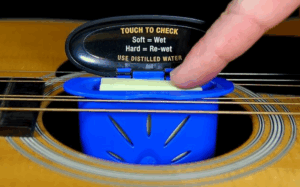
3️⃣ Music Nomad Humitar (MN300)
✅ Check It Out Here
Why I adore it:
Consider this the Humitar ONE’s simpler sibling—no digital screen, just the fundamentals. It’s a favorite among luthiers since it’s long-lasting, effective, and easy to maintain.
Standout features:
-
Reusable, high-capacity sponge.
-
The soft case insert will not scratch or damage the finish.
-
Holds moisture evenly and without leaking.
-
Super inexpensive and dependable.
Trade-Offs:
-
Requires regular refilling every 5–10 days.
-
There is no built-in hygrometer, therefore you will need to purchase one separately.
Ideal for:
Guitarists who desire simplicity and dependability without excessive technology.
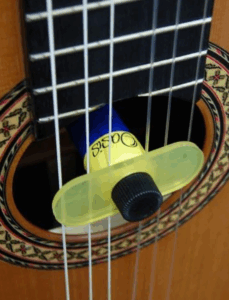
4️⃣ Oasis OH-1 Guitar Humidifier
✅ Check It Out Here
Why I adore it:
The Oasis OH-1 is a well-engineered classic that has long been a favorite among guitarists. It uses a porous cloth tube that slowly releases moisture and visually shrinks as it dries – simple yet effective.
Standout features:
-
A clear visual indicator: the body collapses as it dries.
-
The syringe-style refill allows you to easily add distilled water.
-
No dripping or over-humidification.
-
Compact and fits perfectly into most acoustic soundholes.
Trade-Offs:
-
Only provides moisture; no two-way function.
-
In extremely dry conditions, repeated topping-ups are required.
Ideal for:
Traditionalists who want simple and effective solutions.
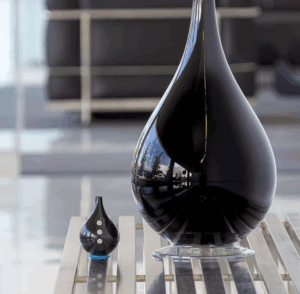
5. Objecto H4 Hybrid Humidifier
✅ Check It Out Here
🎸 The Objecto H4 Hybrid Humidifier: A Game-Changer for Acoustic Guitar Rooms
If you keep your acoustic guitars in one room, the Objecto H4 Hybrid Humidifier is a sleek and reliable way to protect your instruments. It’s designed with both performance and style in mind, quietly keeping your space at the perfect humidity level so your guitars stay healthy, resonant, and crack-free.
With a 2.3-liter tank and up to 20 hours of continuous mist, the H4 easily covers medium-sized rooms without constant refills. Its cool mist technology helps maintain a balanced environment without drying or overheating delicate wood. Several mist settings let you fine-tune output, and the soft indicator lights give you instant feedback on performance.
The H4 runs whisper-quiet, making it ideal for studios and practice spaces where sound clarity matters. An automatic shut-off feature keeps it safe, and the removable tank makes cleaning simple — preventing the buildup of minerals or mold. Plus, the built-in aroma tray and timer add a touch of comfort and control.
Overall, the Objecto H4 Hybrid Humidifier combines function and form perfectly. It keeps your acoustic guitars in their sweet spot — comfortable, well-hydrated, and ready to play whenever inspiration strikes.
🧭 How to Choose the Best One for You
Guitarists’ environments vary, such as desert air, beach humidity, and winter furnace dryness, influencing their choice.
Here’s how to choose the right humidifier for your setup:
1. First, measure your room.
Use a digital hygrometer for at least one week. See how low the humidity drops overnight or during the heating season.
2. Choose your maintenance style.
-
Don’t you mind refilling? Go with Music Nomad or Oasis.
-
Want to put forth little effort? Humidipak Maintain is great.
3. Consider your climate.
-
Dry weather throughout the year indicates a larger capacity or two-way system.
-
Humid summers necessitate a two-way or detachable construction.
4. Plan it out.
-
Simple sponges are inexpensive.
-
Two-way packets cost more over time but require less work.
5. Prepare for replacement parts.
Sponges wear down, and packs need to be changed. Stock up on extras.
🎯 Quick Comparison Table
| Model | Best For | Refill Frequency | Two-Way? | Hygrometer? | Price Range |
|---|---|---|---|---|---|
| Music Nomad Humitar ONE | All-in-one convenience | 7–10 days | ❌ No | ✅ Yes | 💲💲 |
| D’Addario Humidipak Maintain | Automatic, low maintenance | 2–4 months | ✅ Yes | ❌ No | 💲💲💲 |
| Music Nomad Humitar MN300 | Reliable, simple | 5–10 days | ❌ No | ❌ No | 💲 |
| Oasis OH-1 | Classic reliability | 5–10 days | ❌ No | ❌ No | 💲💲 |
| Herco HE360 | Budget / backup | 3–7 days | ❌ No | ❌ No | 💲 |
⚡ Extra Advice on Maintaining Guitar Humidity
Make use of distilled water. Mineral deposit from tap water can block filters or harden sponges.
Steer clear of direct contact. Humidifiers should never come into contact with the bracing or finish of the guitar.
Before every play, check RH. A short glance at a hygrometer can help avoid long-term problems.
Be wise while you store. During dry months, keep guitars in their cases rather than on stands.
Don’t freak out over small drops. Long-term extremes will destroy your guitar, not short-term troughs.
Put a label on your refill schedule. You stay consistent with a little sticker on your case.
Every year, clean. Before the next season, remove any residue, rinse, and completely dry.
Don’t humidify too much. Anything over 60% for prolonged periods of time may result in finish bubbles or edema.
The Ideal Humidity Setup
Here’s what an optimal “guitar zone” looks like:
| Component | Purpose | Notes |
|---|---|---|
| Room Hygrometer | Measures ambient humidity | Mount on wall or shelf away from vents. |
| Case Hygrometer | Monitors closed environment | Clip-on or small digital unit inside case. |
| Humidifier | Adds (or balances) moisture | Choose one of the 5 above. |
| Room Humidifier (optional) | Stabilizes entire space | Great if you store multiple guitars. |
| Thermometer | Watches for heat changes | Temperature swings affect RH levels. |
🪶 In the end, it’s better to be consistent than complicated.
The most costly or fancy humidifier isn’t always the best one.
The greatest one is the one you’ll really use.
Music Nomad Humitar ONE is the best buddy of people who love technology and data.
D’Addario Humidipak Maintain will make your life easy if you don’t want to do any maintenance.
If you want something that will last, the Oasis OH-1 or the Music Nomad MN300 are also great choices.
If you’re on a limited budget or need a backup, the Herco HE360 is the best deal.
Your room’s humidity meter is your hidden weapon, so keep that in mind.
It informs you when to do something, when to fill up, and when to take it easy.
So make sure your guitars are comfy, well-hydrated, and ready to play.
Taking care of your music for a few minutes a day saves you thousands of dollars in repairs and keeps it active for decades.