
🤧 4 Humidifiers To Help With Hay Fever & Allergens

The four humidifiers listed below can be used to alleviate hay fever symptoms (with proper use).
I’ll explain how each can be effective, what to look out for, and how to utilize them for allergy relief.
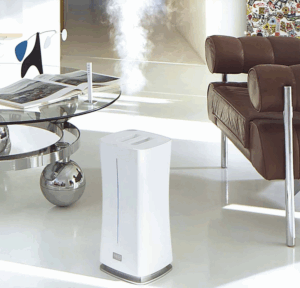
1. Stadler Form EVA Ultrasonic Humidifier With WiFi
✅ Check It Out Here
Why Eva is promising for hay fever patients:
Eva is an ultrasonic humidifier with WiFi and adaptive humidity detection.
Its ultrasonic technology produces fine mist that is easier to breathe (if properly maintained).
The smart sensing feature prevents over-humidification, which can lead to mold and dust mites.
The design usually incorporates a remote or sensor so you don’t have to fiddle with it near your bed or sneeze area.
What to look out for:
-
Unless distilled water or a demineralization cartridge is used, ultrasonic mist may contain dissolved minerals (“white dust”).
-
If the humidity rises too high, dust mites or mold can exacerbate rather than alleviate hay fever symptoms.
Tips for hay fever management:
-
Use Eva in cold mist mode (avoid warm mode, if available, during allergy season).
-
To prevent microbial growth, clean the unit on a regular basis (at least weekly).
-
Place a few feet away from bedding, drapes, or fabrics to avoid damp spots.
-
Use a hygrometer to manage indoor humidity between 40–50%; avoid pushing it higher.
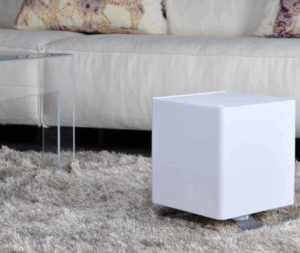
2. The Oskar Evaporative Humidifier
✅ Check It Out Here
Why is Oskar a good choice?
Oskar is an evaporative humidifier that prevents over-humidification because evaporation is self-limiting.
This provides it a better profile during allergy and hay fever seasons.
It usually contains a hygrometer or humidity control to help you manage output.
Because it combines a wick/filter with a fan, it is less likely to produce raw mist or droplets containing allergies.
Caution and Notes:
-
The filter (wick) must be replaced at regular intervals. If the wick is contaminated with mold or allergies, it becomes a liability.
-
If the room is dusty, the breeze may disseminate it; pre-cleaning can help.
Tips for hay fever management:
-
Schedule regular cleaning or replacement of the wick/filter.
-
Always use Oskar on the medium setting rather than “max”.
-
Keep windows closed during heavy pollen seasons to keep interior air quality under control.
-
Pair with a HEPA air purifier to filter allergens from the outside.
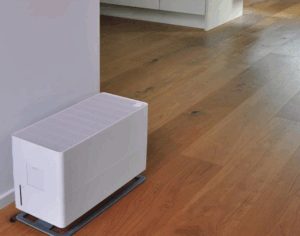
3. Stadler Form Oskar Big Humidifier
✅ Check It Out Here
Why Oskar Big could be beneficial in bigger spaces:
For larger rooms or open areas, Oskar Big provides more capacity while preserving the evaporative process.
This enables you to humidify big shared rooms or living spaces where symptoms may occur.
Because it adheres to the same design concept as Oskar, it includes built-in humidity overshoot protection.
Monitor the following:
-
Because it is so enormous, consistent cleaning is even more important—a larger tank means more surface area for mold, etc.
-
Positioning is critical: mist should spread without condensing on walls or windows.
Useful hay fever tips:
-
To minimize saturation of fabrics, use the night mode or reduce power at night.
-
Check surrounding surfaces (windows, walls) for condensation; if found, reduce humidity.
-
Use in conjunction with allergy control (cleaning, filters) to reduce triggers.
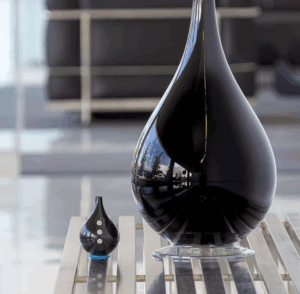
4. Objecto H4 Hybrid Humidifier
✅ Check It Out Here
Why is H4 a useful hybrid model for allergy conditions?
Objecto H4 is a hybrid humidifier (cool mist) that combines evaporation with ultrasonic (or a similar approach) to reduce the pure ultrasonic “white dust” issue.
It is intended for indoor comfort while maintaining design sensibilities.
The hybrid technique can provide a gentler, more regulated mist that is ideal for allergy-prone consumers.
Possible drawbacks:
-
It still requires regular cleaning; if internal surfaces contain mold or germs, this becomes a concern.
-
Hybrid units may require occasional part replacement or descaling.
Hay fever tips:
-
Use distilled or demineralized water to reduce mineral residue.
-
Use a low-output setting overnight.
-
Combine with an air purifier in the room to filter out allergens while humidifying.
🧮 Comparison Table for Hay Fever Use
| Model | Type & Mist Mode | Strengths for Hay Fever | Challenges / Risks | Best Use Case |
|---|---|---|---|---|
| Eva | Ultrasonic (smart) | Smart sensing helps prevent over-humidifying; fine mist | White dust risk; needs distilled water | Bedrooms with controlled environment |
| Oskar | Evaporative | Self-limiting, lower risk of oversaturation | Filter upkeep critical | Medium rooms, steady use |
| Oskar Big | Evaporative (larger capacity) | Covers large spaces, supports consistent humidity | More cleaning demands | Living rooms, open family areas |
| Objecto H4 | Hybrid cool mist | Low white dust, gentler mist | Internal maintenance still needed | Allergy-prone bedrooms or shared spaces |
🌸 The Most Effective Methods for Utilizing Humidifiers During the Season of Hay Fever
There is more to the war than just having a competent unit.
These are the steps to optimize:
1. Maintain a humidity level that is within the permissible range (40–50%)
It is dryness if the temperature is too low, and mold and dust mites if the temperature is too high.
2. Use water that has been demineralized or distilled
When you do this, mineral residue and white dust, both of which might bother you, are reduced.
3. Clean once a week
Vinegar or a gentle disinfectant should be used.
Scrub the nozzles, the base, and the tank.
Before reassembling, make sure it is completely dry.
4. When necessary, replace the filters and wicks
Particularly for evaporative types like as the Oskar and Oskar Big variations.
5. It is best to avoid placement near walls or fabrics
Moisture and dust problems can be made worse by condensation of mist.
6. Get out of the way before the allergy triggers arrive
In order to stabilize the humidity, it is recommended to start the humidifier around thirty minutes before the onset of symptoms or before going to sleep.
7. Use in conjunction with air cleansing
During the process of humidification, allergens can be removed from the air by using a HEPA air purifier in conjunction with the humidifier.
8. A strategic venting system
To flush out stale air during times of low pollen, open windows for a short period of time and then close them again.
I had a terrible springtime episode in which my eyes were red, my nose was running incessantly, and I had trouble sleeping.
I experimented with one of the more straightforward humidifiers that I had sitting around, but I failed to properly clean it, and as a result, it quickly began to smell musty, irritated my throat, and made my symptoms intensify.
When I had that realization, I realized that a humidifier needs to be maintained just as much as it needs to hum.
After I made the transition to a model similar to Oskar and performed regular maintenance on it, as well as linked it with air purifiers, I discovered that I had fewer sneezes, experiencing less congestion, and sleeping more deeply.
Although it is not a foolproof solution, it has become an integral element of my allergy toolset.